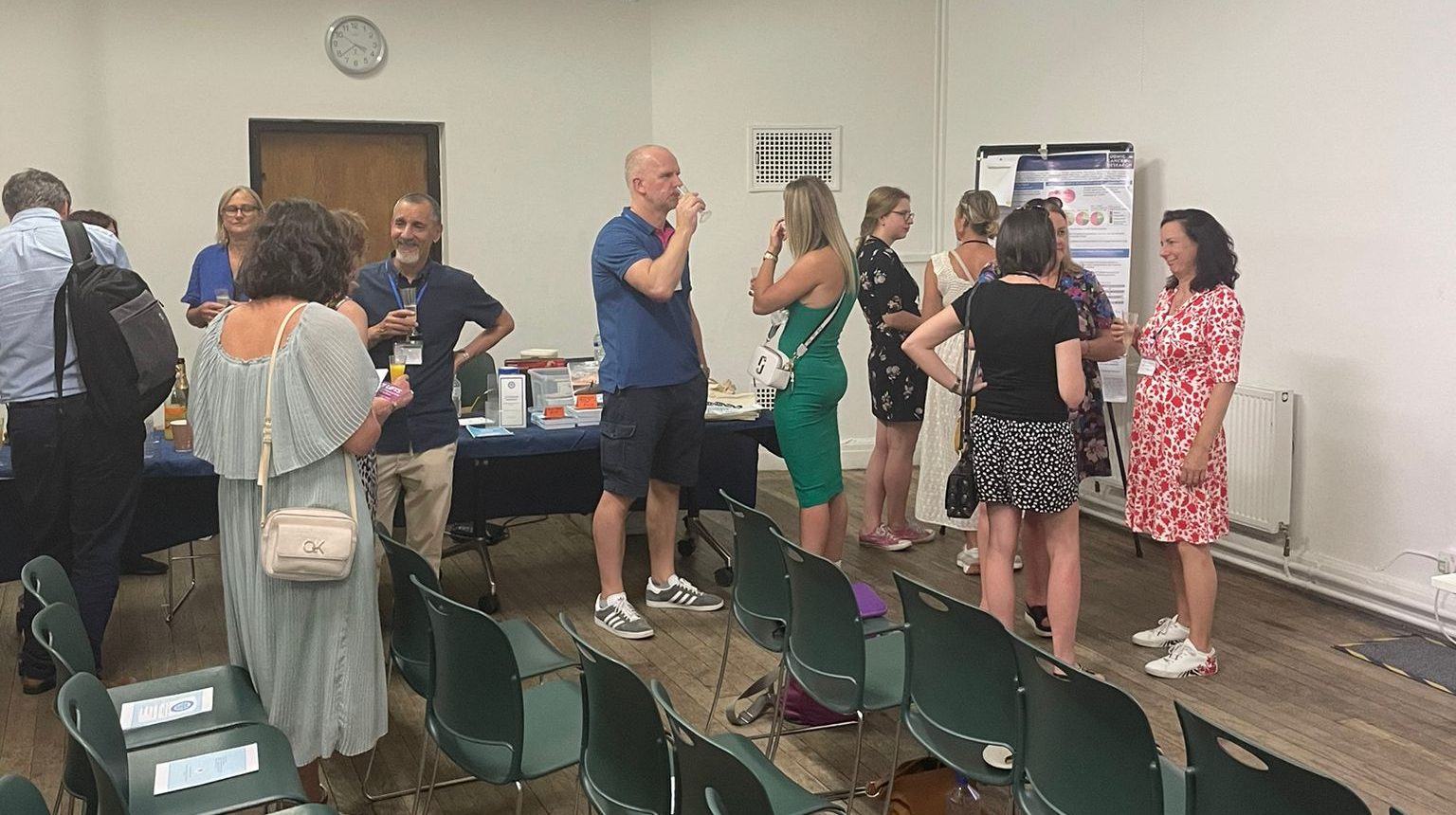
LFS UK 2023 took place on September 9th, a scorching hot day this year, at the Conway Hall in Central London. Due to the heat a number of people who had booked contacted us to let us know that they couldn’t make it – but well done to those that did!
Our first Voices of LFS speaker was one of our ambassadors, Patricia Walsh, who talked about the value of science and the ways that it had impacted her life – through her LFS and her husband’s Huntingdon’s disease. Her message was clear – knowledge is power, so it’s better to know than not know.
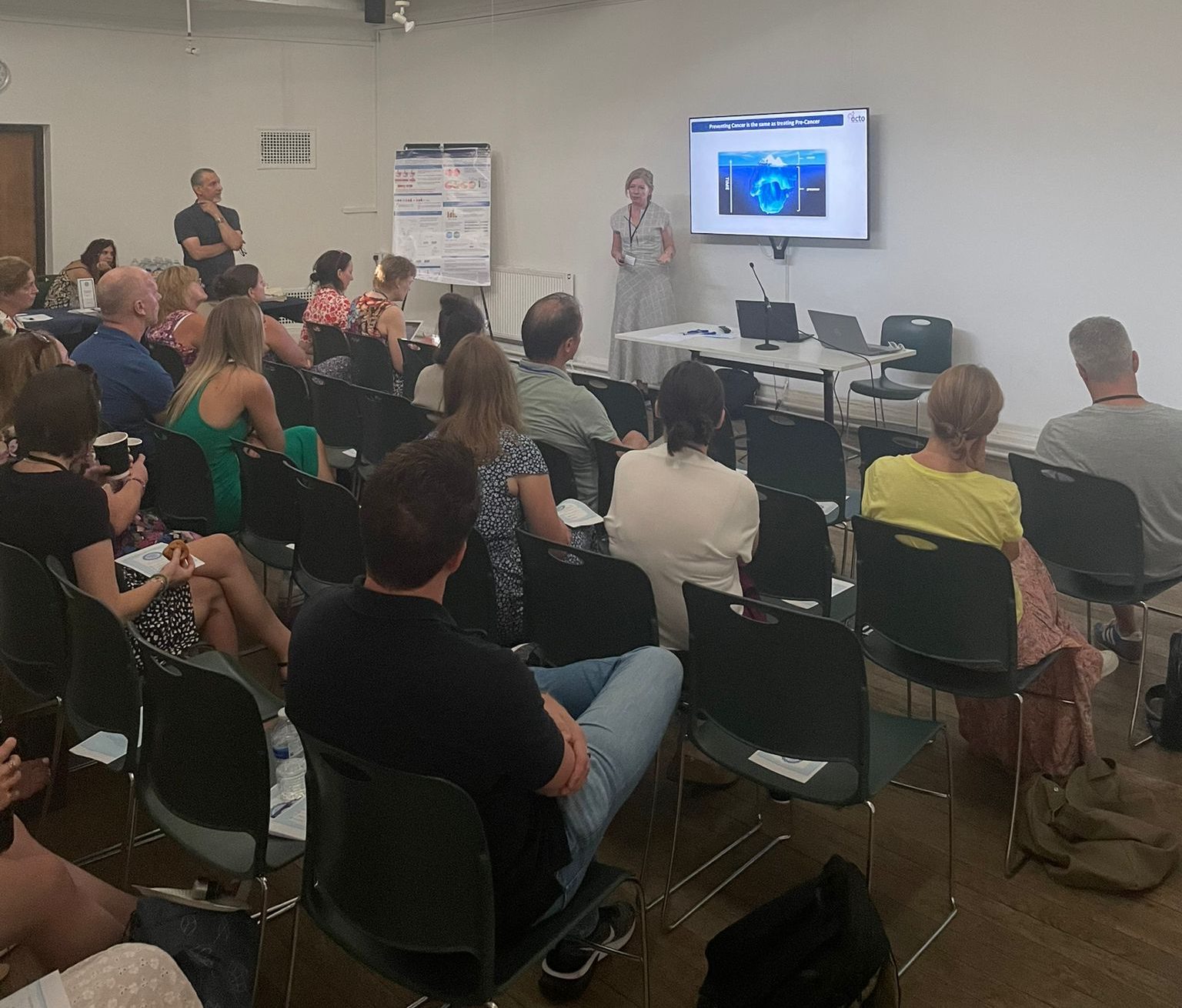
Professor Sarah Blagden’s talk [presentation] was the Metformin in Li Fraumeni (MILI) Study, the pioneering clinical trial that will test the anti-diabetic drug metformin to see if it reduces the incidence of cancer in people with LFS. Sarah discussed the pre-cancerous niche – the precursor state that can exist for years before it switches mode and becomes a cancer, the being that treating this pre-cancer is the key to preventing cancer. The MILI trial will be using metformin to treat this pre-cancer. The outline of the trial was explained, along with the benefits to participants for both the metformin and non-metformin groups, in relation to screening and whole-body MRI.
Dr Joseph Christopher, of the Sanger Institute, Cambridge, stepped in for Dr Raheleh Rabari to give us an update to the Li Fraumeni over Time Study (LiFTS). Joseph dialled in to give us a taste of the early findings, as well as to remind us of the questions the study is asking – namely, why does cancer risk change over time in people with LFS? Why does it have the distinct patterns of cancer incidence that it does? What factors influence individual risk? There was also an introduction to some of the cutting edge tools that the LiFTS project is using – the laser cutting microscope and single-molecule DNA sequencing. These tools give researchers an unprecendented glimpse into what’s going on in cells. Finally, there was some intriguing data looking at fathers without LFS who have some level of TP53 mutations in their sperm and how this might be related to de novo LFS cases.
Dr Elena Cojacaru, from the Royal Marsden Hospital (RMH), followed with an update on the SIGNIFIED and ICED projects [presentation]. SIGNIFIED is a trial looking at cancer incidence in people with LFS undergoing annual whole-body MRI (WBMRI). A secondary aim is to produce data on the cost-effectiveness of WBMRI so that it can be rolled out across the whole of the NHS, rather than in some places only. So far 55 patients have been included in the study. The ‘Inherited cancers – early diagnosis’ (ICED) study is looking to use liquid biopsies (blood and urine samples) to detect cancers early. The idea is to compare the findings from these blood/urine samples with findings from scans to see if early detection is possible.
The second of our ‘Voices of LFS’ was Nina Irwin, who described her LFS story from initial breast cancer diagnosis in 1993 to LFS diagnosis at second breast cancer in 2016 to participation in the SIGNIFIED study in 2022 [presentation]. The first SIGNIFIED scan
detected a lung tumour at a very early stage, enabling it to be surgically removed without the need for chemotherapy. Without SIGNIFIED, this would most likely have been undetected until it was too late to be treated. However, the second WBMRI has also detected something, and Nina described waiting for surgery for this too. It could be, as she pointed out, that SIGNIFIED has saved her life twice.
A downside to WBMRI is that it can also show lots of odd ‘lumps and bumps’ that are not cancers at all. These are called ‘incidental findings’ and was the topic for Dr Madeleine Adams from the All Wales Paediatric Cancer Predisposition Service [presentation]. Drawing on data from the relatively new service, experience in the last 3 years shows that 8 of 15 (53%) WBMRI scans had included incidental findings, whereas 2 of 22 brain MRIs (9%) had included such findings. None of these findings had turned out to be cancers. It was also clear that such findings could be expected particularly on first scans, and the service had now included a warning about this to new patients.
The last speaker of the day was Dr Emma Woodward, from the Manchester Centre for Genomic Medicine, presenting on the topic of North of England LFS Clinical Care and Research [presentation]. Challenges of service delivery, including the provision of whole-body MRI and the surveillance protocol in place were all outlined. The second part focused on research, with Manchester having an incredibly strong track record for LFS. Liquid biopsy and early detection are a current focus, particularly using ctDNA technology to pick up signals from blood tests in the ATLAS project.
This year we also had the first poster presentation – Oxford University PhD student Hannah Fuchs presented a poster on her research on p53 auto-antibodies. There was a lot of interest, and Hannah had the perfect opportunity to explain her work to multiple people during the day.
Overall, it was an incredibly uplifting day. Alongside the formal presentations, the conference is always a fantastic social event – we had people with LFS from all over the country. Some were old friends, but also some attending for the first time. It was great to see so much interaction and networking going on – and sets us up for the year ahead.
Finally, we are grateful to the Addie Brady Foundation and to Bamboo Loans for financial sponsoring the conference – their on-going support is much appreciated. Thank you!